Field record 05
Mérida · Mexico · 2017
A paper curriculum becomes a living one
At Centro Educativo Yaldud, the opportunity was not to replace teaching. It was to give an existing curriculum more flexible tools.
Working story · Facts and publication permissions are being verified before launch.
Care
In 2017, the foundation began working with Centro Educativo Yaldud, A.C., a Montessori elementary school in Mérida. The opportunity was not to replace the school’s teaching model. It was to help preserve and extend a large paper curriculum that educators had already built.
Digitization offered two practical advantages. It could protect the integrity of teaching material that existed in a fragile physical form, and it could give teachers a more flexible way to bring that material into the classroom.
Share
The foundation delivered ten iPads in military-grade cases. The count is supported by project expense records, which document both the tablets and ten protective cases.
The surviving photographs show the sequence around the delivery: devices being prepared, teachers gathered for training, and tablets moving into use with groups of students. That sequence is the project. The equipment had to be understood by the educators, fit the Montessori environment, and remain useful after the visitors left.
Grow
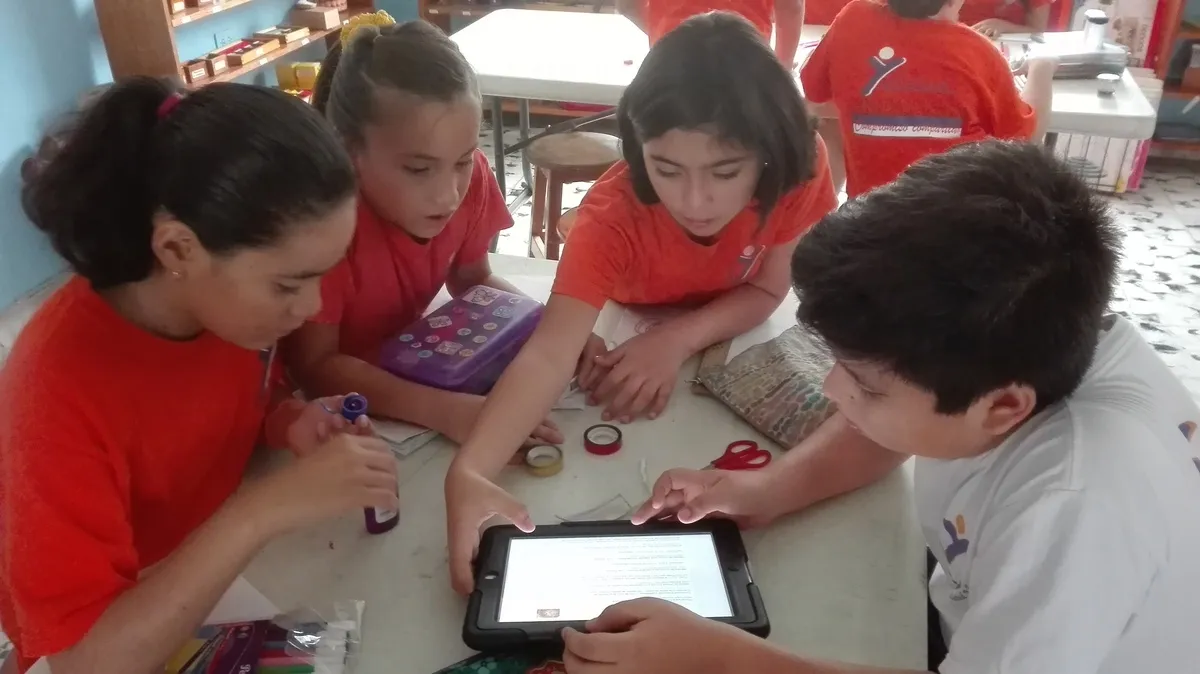
In the classroom, students did not sit in rows facing ten new screens. They gathered around them. The images show tablets used alongside paper, scissors, books, conversation, and the physical materials already present in the room.
That is a more accurate picture of the project than the language of technological transformation. The iPads became another surface on which students could find information, document work, and explore together. The school’s curriculum and teachers remained at the center.
Repeat
Mérida offered a useful correction to the idea that innovation must begin with replacement. Sometimes the most valuable move is to protect accumulated knowledge, make it easier to use, and give it room to evolve.
The new tool mattered because it made the existing work easier to carry forward.
Open record
- Confirm the partner’s current name and relationship with the foundation
- Verify exact dates and student and teacher participation
- Document what continued after the initial training
- Review permission to identify the school, principal, and photographed participants