Field record 03
Orange Walk · Belize · 2013 onward
A classroom tool becomes a teaching system
A shortage of current classroom materials led to a practical resource. The real project was building lessons teachers could adapt, repeat, and improve.
Working story · Facts and publication permissions are being verified before launch.
Care
The first Belize phase was completed in October 2013. The field record describes eight schools across two districts, each working with classroom materials that were limited, difficult to update, or both. The need was broader than devices: schools also needed teaching materials, writing supplies, and books.
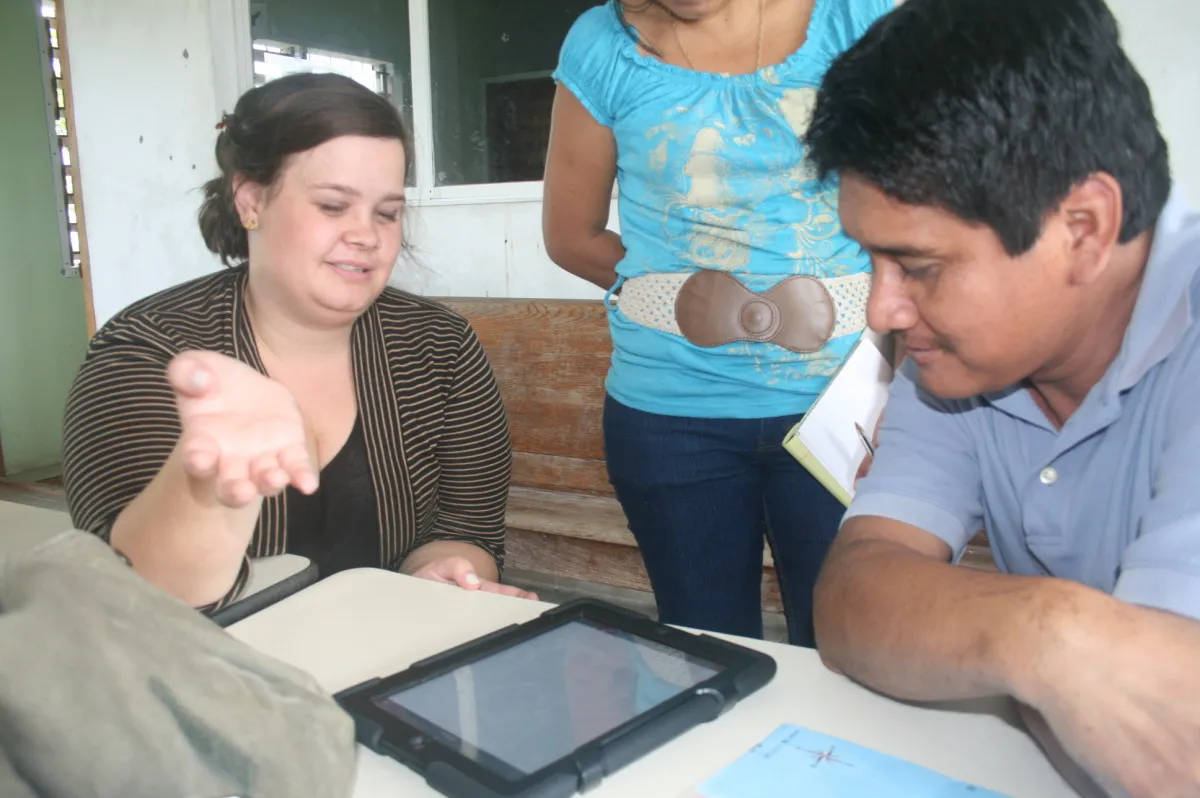
That distinction shaped the response. Technology would be useful only if it fit the daily work of teachers and students. The foundation chose tablets because they could carry many kinds of material, move easily between classrooms, and make practice feel more immediate. The recovered site records forty iPads, protected by rugged cases, alongside children’s books and other learning materials.
Share
Educators created short, focused units called “iCourses”—one-to-five-day sequences that combined a subject, a grade level, and a small set of educational apps. Local teachers were introduced to both the tablets and the course structure before the devices entered regular classroom use.
The aim was practical: leave behind something a teacher could adapt, repeat, and improve. A tablet full of unfamiliar software would have been equipment. A tablet connected to a lesson and understood by the teacher could become part of the classroom.
Grow
The archived project report describes a classroom follow-up six months later focused on multiplication. Students said the drills helped them move away from counting on fingers or drawing marks and toward quicker mental recall. Several described the exercises as games; one wrote about completing sixty multiplication problems in a minute. The original interviews are valuable evidence, but their method and publication permissions still need review before individual students are quoted by name.
Repeat
Belize changed the foundation’s understanding of access. Putting a device in a classroom can widen what is available. Preparing teachers to turn that device into a repeatable learning system is what allows the resource to keep working.
The equipment was the resource. The teaching was the project.
Open record
- Confirm school and district names, teacher participation, and the forty-device count
- Document the six-month multiplication follow-up and its methodology
- Review consent for identifiable photographs and student testimony